Welcome to Quanzhou Weihang Machinery Co.,Ltd.

General Processes and Flows of Hydraulic Cylinder Manufacturing
Date : 2025-12-29 10:02:01Pageviews : 211

Hydraulic cylinders are critical components widely used in engineering machinery, industrial equipment, aerospace, and other fields, serving as the core executive elements that convert hydraulic energy into mechanical linear motion. The manufacturing of hydraulic cylinders requires strict adherence to scientific processes and precise quality control to ensure their reliability, durability, and performance stability under high-pressure and harsh working conditions. Below is a detailed explanation of the general manufacturing processes and flows of hydraulic cylinders, covering key stages from raw material preparation to final product inspection.
1. Raw Material Selection and Preparation
The performance of hydraulic cylinders largely depends on the quality of raw materials, which must meet mechanical property requirements such as high strength, wear resistance, and corrosion resistance. The main raw materials include:
- Cylinder barrel: Typically made of high-quality carbon steel (e.g., 45# steel) or alloy steel (e.g., 27SiMn). The raw material is usually in the form of seamless steel pipes, which undergo strict inspections for dimensional accuracy, wall thickness uniformity, and internal defects (such as cracks and inclusions) using non-destructive testing (NDT) methods like ultrasonic testing.
- Piston rod: As the key moving part, it requires excellent wear resistance and surface finish. Common materials include 40Cr alloy steel or stainless steel. The raw material is round steel, which is cut to the required length based on design specifications.
- Piston, end caps, and seals: Pistons are often made of ductile iron or aluminum alloy for lightweight and wear resistance; end caps are usually forged or cast steel to ensure structural strength; seals are selected from high-temperature and oil-resistant materials such as nitrile rubber (NBR) or polytetrafluoroethylene (PTFE) according to working conditions.
After material selection, the raw materials undergo cutting, deburring, and cleaning processes. Seamless steel pipes for cylinder barrels are cut to fixed lengths using circular saws or plasma cutting machines, while round steel for piston rods is cut with band saws. Deburring is performed to remove sharp edges and burrs generated during cutting, preventing damage to seals during assembly. Finally, the raw materials are cleaned with degreasing agents and water to remove oil, rust, and dust, laying a foundation for subsequent processing.
2. Processing of Core Components
2.1 Cylinder Barrel Processing
The cylinder barrel is the main body of the hydraulic cylinder, and its inner surface quality directly affects the sealing performance and service life. The processing steps include:
- Turning: The outer surface of the seamless steel pipe is turned on a lathe to ensure dimensional accuracy (such as outer diameter and length) and perpendicularity of the end face, which facilitates subsequent assembly with end caps.
- Boring and Honing: This is the key process to ensure the inner surface quality. First, the inner hole is bored to roughly shape the cylinder cavity, and then honing is performed using a honing machine. Honing can achieve a high surface finish (Ra ≤ 0.4 μm) and precise dimensional tolerance (IT7-IT8), ensuring the fit between the cylinder barrel and the piston. During honing, a honing stone with appropriate abrasive grains is used to grind the inner surface, and cutting fluid is continuously injected to cool and remove chips.
- Thread Processing: Threads are processed on the end of the cylinder barrel using a tapping machine or lathe to connect with end caps through bolts or nuts. The thread accuracy is strictly controlled to prevent oil leakage due to loose connection.
2.2 Piston Rod Processing
The piston rod needs to withstand alternating loads and friction, so its processing focuses on surface hardness and precision:
- Turning and Milling: The round steel is turned to process the outer diameter, step, and end face, and milling is performed if necessary to process keyways or installation holes for piston connection.
- Heat Treatment: To improve surface hardness and wear resistance, the piston rod undergoes quenching and tempering treatment. The quenching temperature is usually 830-860°C, and tempering is performed at 550-600°C after quenching to balance hardness and toughness. The surface hardness after heat treatment can reach HRC 45-55.
- Grinding: The outer surface of the piston rod is ground on a cylindrical grinder to achieve high dimensional accuracy (IT6-IT7) and surface finish (Ra ≤ 0.2 μm). Grinding also corrects the straightness of the piston rod, preventing jamming during movement.
- Surface Coating: To enhance corrosion resistance and reduce friction, the piston rod surface is often coated with hard chrome plating. The chrome plating thickness is generally 0.05-0.15 mm, and after plating, polishing is performed to further improve the surface finish. Some high-demand applications may use thermal spraying or nitriding treatment instead of chrome plating.
2.3 Piston and End Cap Processing
- Piston Processing: Pistons are processed by turning or milling. The outer diameter of the piston is precisely machined to match the inner hole of the cylinder barrel with a reasonable fit clearance (usually 0.02-0.05 mm). Grooves for installing seals (such as O-rings and guide sleeves) are processed on the piston surface, and the groove dimensions must match the seal specifications.
- End Cap Processing: End caps are processed through forging, casting, or plate cutting, followed by turning and drilling. The end cap needs to process the inner hole for piston rod penetration, bolt holes for connection with the cylinder barrel, and oil inlet/outlet holes. The inner hole of the end cap is often equipped with a guide sleeve and seal groove to ensure the sealing and guiding performance of the piston rod.
3. Assembly Process
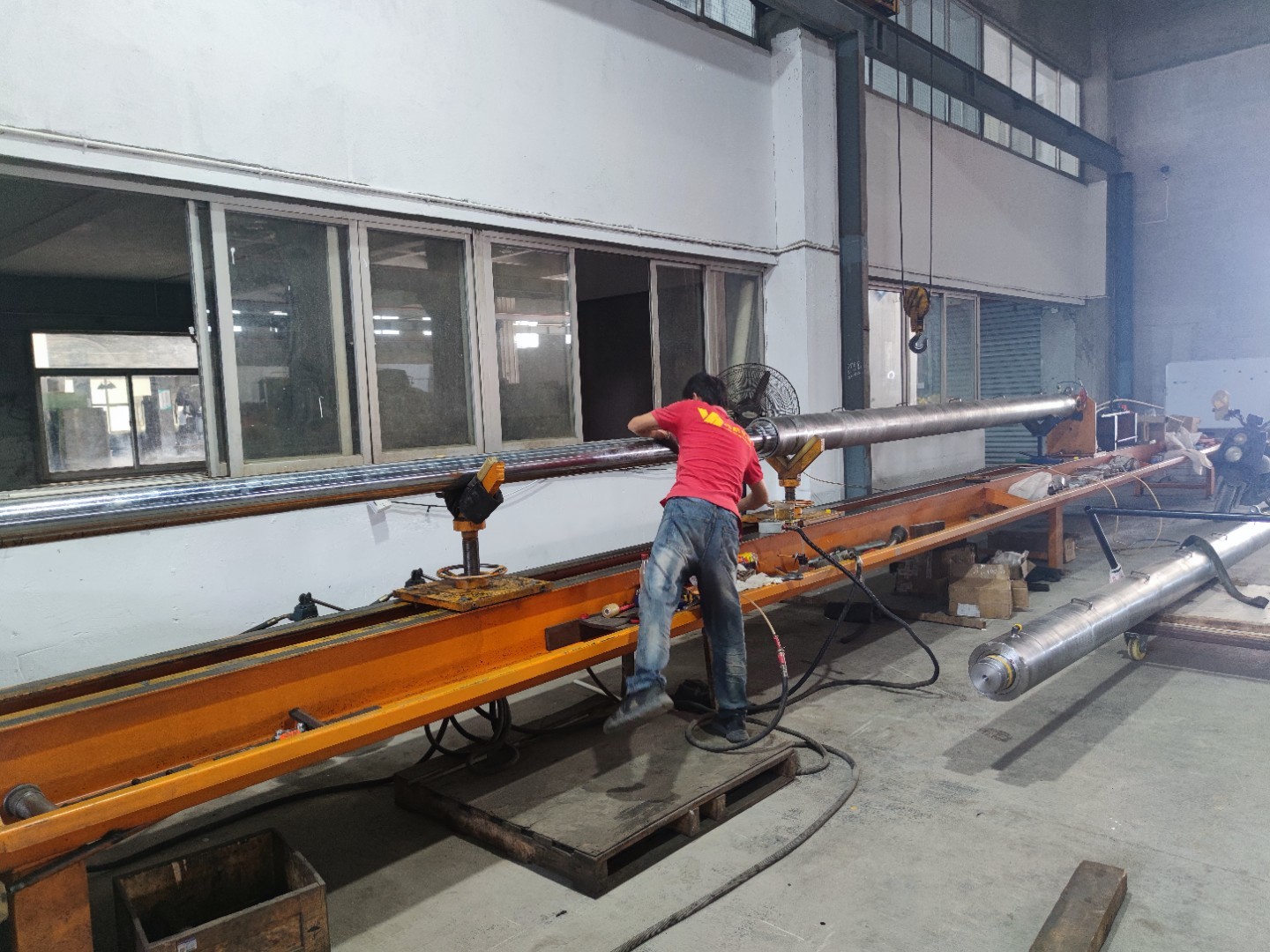
Assembly is a critical link that integrates all components into a complete hydraulic cylinder, requiring strict adherence to operational specifications to avoid assembly errors. The main steps are:
- Component Inspection: Before assembly, all processed components (cylinder barrel, piston rod, piston, end caps, seals, etc.) are inspected for dimensional accuracy, surface quality, and completeness. Unqualified components (such as damaged seals or oversized dimensions) are rejected to ensure assembly quality.
- Seal Installation: Seals (O-rings, Y-rings, dust rings, etc.) are installed into the seal grooves of the piston and end caps. During installation, a thin layer of hydraulic oil is applied to the seal surface to reduce friction and prevent damage to the seal lip. Special tools are used to avoid twisting or deformation of the seals.
- Piston and Piston Rod Assembly: The piston is connected to the piston rod through bolts or pins. The connection must be tightened with a torque wrench according to the specified torque to ensure firmness. After assembly, the coaxiality of the piston and piston rod is checked to prevent jamming during movement.
- Cylinder Barrel Assembly: The piston-rod assembly is inserted into the cylinder barrel, and the end caps are installed and fixed with bolts. During assembly, attention is paid to the alignment of the oil inlet/outlet holes to ensure smooth oil flow. The guide sleeve is installed in the end cap to guide the piston rod and prevent eccentricity.
- Pre-tightening and Adjustment: After assembly, the bolts are pre-tightened to the specified torque to prevent loosening during operation. The movement of the piston rod is checked manually to ensure flexibility without jamming or abnormal noise.
4. Testing and Quality Control
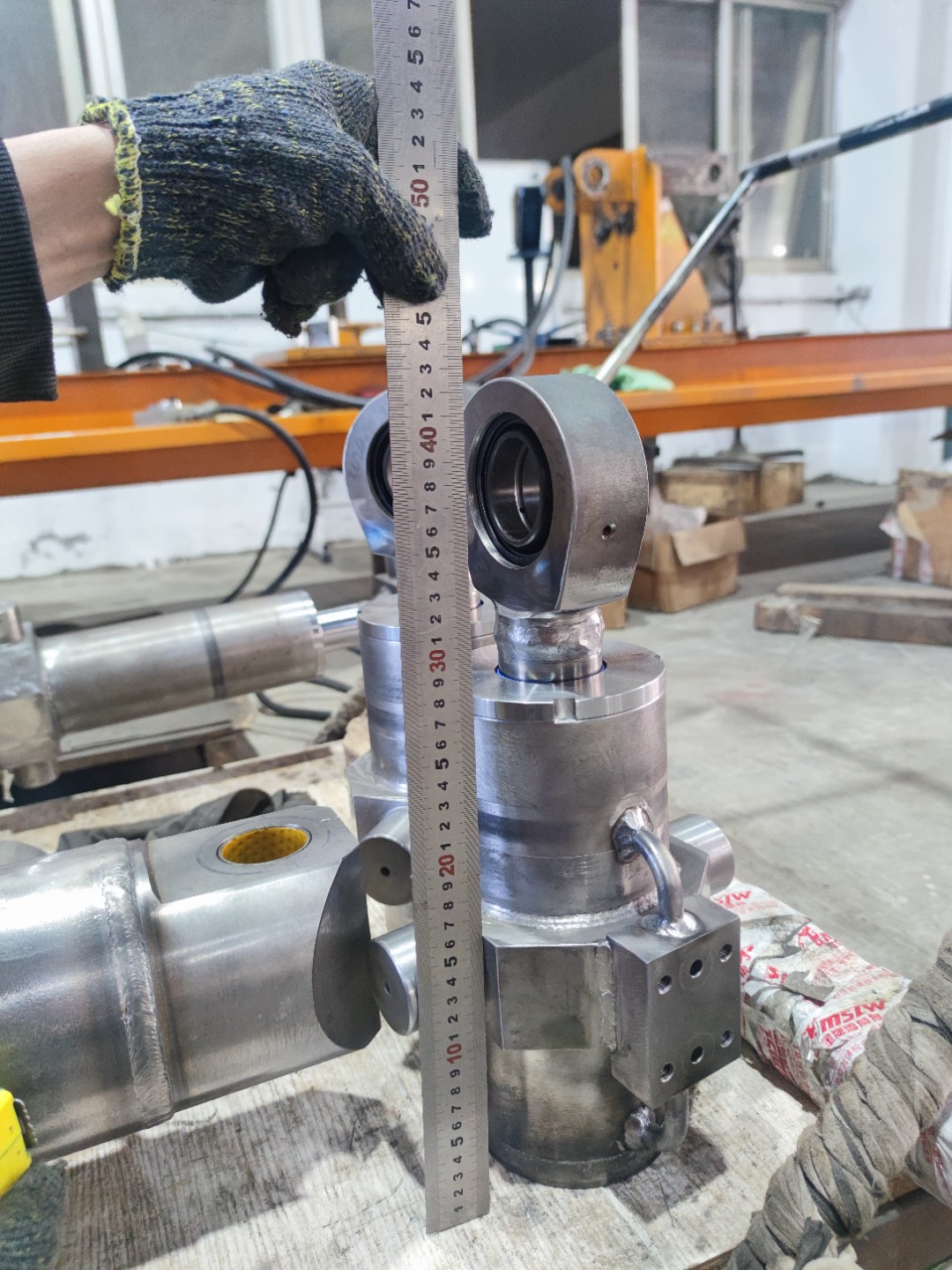
To ensure the performance and reliability of hydraulic cylinders, strict testing is performed after assembly, including:
- Pressure Test: The hydraulic cylinder is filled with hydraulic oil, and the pressure is increased to 1.5 times the rated working pressure. The pressure is maintained for 5-10 minutes to check for oil leakage at the seals, connections, and welds. If leakage is found, the seals or bolts are adjusted or replaced.
- Leakage Test: Under the rated working pressure, the piston rod is extended and retracted repeatedly, and the leakage at the rod end and cap end is measured. The leakage rate must meet the industry standard (usually ≤ 5 mL/min).
- Performance Test: The output force, movement speed, and stroke accuracy of the hydraulic cylinder are tested. The output force is checked using a load cell, and the movement speed is measured with a speed sensor to ensure compliance with design requirements. The stroke accuracy is verified by measuring the actual stroke against the specified stroke.
- NDT Inspection: For key welds (such as the connection between the cylinder barrel and end caps), non-destructive testing methods such as radiographic testing (RT) or magnetic particle testing (MT) are used to detect internal or surface defects, ensuring structural integrity.
5. Surface Treatment and Finishing
After passing the tests, the hydraulic cylinder undergoes surface treatment to improve corrosion resistance and appearance quality:
- Degreasing and Rust Removal: The outer surface is degreased with a degreasing agent and derusted with a wire brush or sandblasting to remove oil, rust, and oxide layers.
- Painting: The outer surface is sprayed with anti-corrosion paint (such as epoxy resin paint or polyurethane paint) to prevent rust and corrosion. The paint thickness is usually 80-120 μm, and the surface is polished after painting to ensure a smooth and uniform appearance.
- Marking: The hydraulic cylinder is marked with key information such as model, rated pressure, stroke, serial number, and manufacturer's name for identification and traceability.
Conclusion
The manufacturing of hydraulic cylinders is a complex process involving multiple disciplines such as material science, mechanical processing, and assembly technology. Each link, from raw material selection to final testing, requires strict quality control and precise operation to ensure the product meets the requirements of high pressure, high efficiency, and long service life. With the continuous development of manufacturing technology, advanced technologies such as CNC machining, automated assembly, and intelligent testing are increasingly applied in hydraulic cylinder production, improving production efficiency and product quality while promoting the development of the hydraulic industry.
Quanzhou Weihang Machinery Co.,Ltd.
Tel: 86-0595-27555169, 19942876218
E-mail: sales@whmechtech.com
Service Hours: 8:00AM-18:00PM (GMT+8)
Address: NO.444 Lunqian Road, Zhangban Town,
Taiwanese Investment Zone,
Quanzhou, China


