Welcome to Quanzhou Weihang Machinery Co.,Ltd.

Commonly Used Software in Hydraulic Cylinder Design
Date : 2026-02-02 10:21:17Pageviews : 155

Hydraulic cylinders are critical components in various industrial applications, from construction machinery to aerospace systems, where precise force transmission, load-bearing capacity, and structural integrity are paramount. The design process of hydraulic cylinders involves complex tasks such as geometric modeling, structural analysis, fluid dynamics simulation, and system integration, which rely heavily on specialized software tools to ensure accuracy, efficiency, and compliance with industry standards. This article aims to systematically introduce the commonly used software in hydraulic cylinder design, highlighting their core functions, application scenarios, and technical advantages.
1. CAD (Computer-Aided Design) Software for Geometric Modeling
CAD software serves as the foundation of hydraulic cylinder design, enabling engineers to create detailed 2D drawings and 3D models that accurately reflect the cylinder’s structure, dimensions, and assembly relationships.
1.1 Autodesk AutoCAD
As a widely adopted 2D CAD tool, AutoCAD is extensively used in the initial design phase of hydraulic cylinders for creating schematic diagrams, detail drawings, and assembly layouts. Its powerful drafting functions allow engineers to define key dimensions such as bore diameter, rod diameter, stroke length, and mounting styles with high precision. The software supports parametric drawing, which facilitates quick modifications when adjusting design parameters, and its compatibility with various file formats (e.g., DWG, DXF) ensures seamless data exchange with other design and manufacturing tools. AutoCAD is particularly suitable for small to medium-sized enterprises or simple cylinder designs where 2D documentation is the primary requirement.
1.2 SolidWorks
SolidWorks is a leading 3D CAD software favored for its intuitive interface and robust parametric modeling capabilities, making it ideal for complex hydraulic cylinder design. Engineers can use SolidWorks to construct 3D models of cylinder components (e.g., barrel, piston, rod, end caps) with precise geometric constraints, and perform virtual assembly to check for interference between parts. The software’s integrated design analysis tools, such as SimulationXpress, allow for basic structural checks (e.g., stress distribution) during the modeling phase, reducing the need for separate analysis software in the early design stages. Additionally, SolidWorks supports the generation of detailed 2D drawings with automatic dimensioning and bill of materials (BOM) creation, streamlining the transition from design to manufacturing.
1.3 Siemens NX (formerly Unigraphics NX)
Siemens NX is a high-end CAD/CAM/CAE integrated software that excels in the design of complex, high-performance hydraulic cylinders, especially those used in aerospace, automotive, and heavy machinery industries. Its advanced surfacing and solid modeling tools enable the design of irregularly shaped components (e.g., custom end caps, sealing grooves) with exceptional precision. NX’s parametric and associative modeling features ensure that changes to one component are automatically propagated throughout the assembly, improving design efficiency. Moreover, NX integrates seamlessly with other Siemens simulation tools (e.g., NX Nastran, NX Flow) for comprehensive performance analysis, making it a preferred choice for large-scale engineering projects requiring end-to-end design and simulation integration.

2. CAE (Computer-Aided Engineering) Software for Performance Simulation
CAE software plays a crucial role in validating the performance and reliability of hydraulic cylinders by simulating structural stress, fluid dynamics, and thermal behavior, thereby reducing the need for costly physical prototypes.
2.1 ANSYS Mechanical
ANSYS Mechanical is a widely used finite element analysis (FEA) software for structural simulation of hydraulic cylinders. It enables engineers to analyze stress, strain, and deformation of cylinder components under various loading conditions (e.g., internal pressure, axial load, bending moment). For example, ANSYS can simulate the stress distribution in the cylinder barrel to ensure it meets material strength requirements (e.g., yield strength, fatigue life) and predict potential failure points. The software supports material nonlinearity (e.g., plastic deformation) and contact analysis (e.g., between piston and barrel, rod and seal), providing accurate results for complex structural interactions. ANSYS Mechanical also offers fatigue analysis modules to assess the cylinder’s service life under cyclic loading, a critical consideration for hydraulic cylinders in continuous-operation applications.
2.2 Abaqus
Abaqus is a powerful FEA software known for its ability to handle complex nonlinear problems, making it suitable for advanced hydraulic cylinder design. It excels in simulating large deformations, dynamic loading, and multi-physics interactions (e.g., structural-fluid coupling). For hydraulic cylinders, Abaqus can analyze the behavior of sealing systems (e.g., O-rings, lip seals) under pressure, predicting leakage and wear characteristics. It also supports thermal analysis to simulate temperature distribution in the cylinder during operation, which is important for applications involving high-speed or high-pressure conditions that generate significant heat. Abaqus’s flexible modeling environment and extensive material library (including metals, elastomers, and composites) make it a valuable tool for optimizing the design of hydraulic cylinders in extreme operating environments.
2.3 Fluent (ANSYS Fluent)
Fluent is a computational fluid dynamics (CFD) software used to simulate the flow of hydraulic fluid within the cylinder, including pressure distribution, velocity profiles, and heat transfer. By analyzing the fluid flow, engineers can optimize the cylinder’s internal geometry (e.g., port design, piston rod diameter) to minimize pressure losses, reduce cavitation, and improve energy efficiency. Fluent can also simulate the behavior of hydraulic fluid under different temperatures and viscosities, helping to select the appropriate fluid type for the application. For example, in high-speed hydraulic cylinders, Fluent can predict the formation of vortices or dead zones that may affect performance, allowing engineers to modify the design to enhance fluid flow uniformity.

3. Hydraulic System Simulation Software
In addition to component-level design and simulation, hydraulic cylinder design often requires integration with the overall hydraulic system. Specialized hydraulic system simulation software enables engineers to model the interaction between the cylinder and other system components (e.g., pumps, valves, hoses) and optimize system performance.
3.1 AMESim (Advanced Modeling and Simulation Environment for Systems Engineering)
AMESim is a leading multi-domain system simulation software widely used in hydraulic system design. It provides a comprehensive library of hydraulic components, including various types of hydraulic cylinders (e.g., single-acting, double-acting, telescopic), pumps, valves, and accumulators. Engineers can use AMESim to model the entire hydraulic system, simulate dynamic responses (e.g., cylinder speed, force output) under different operating conditions, and optimize system parameters (e.g., valve flow rate, pump pressure) to meet performance requirements. AMESim’s user-friendly graphical interface allows for quick model construction without extensive programming, and its advanced simulation capabilities (e.g., transient analysis, frequency response analysis) enable accurate prediction of system behavior, including pressure spikes, response delays, and energy consumption.
3.2 MATLAB/Simulink with Hydraulic Toolbox
MATLAB/Simulink is a versatile simulation platform that, when combined with the Hydraulic Toolbox, becomes a powerful tool for hydraulic system and cylinder design. The Hydraulic Toolbox provides pre-built models of hydraulic components, allowing engineers to construct detailed system models and perform dynamic simulations. Simulink’s block-diagram environment enables the integration of hydraulic system models with control systems (e.g., PID controllers) to simulate closed-loop operation, which is essential for hydraulic cylinders used in precision positioning applications. MATLAB’s powerful data analysis and visualization tools allow engineers to process simulation results, optimize design parameters, and generate reports. Additionally, MATLAB/Simulink supports code generation, enabling the rapid implementation of control algorithms on embedded systems.
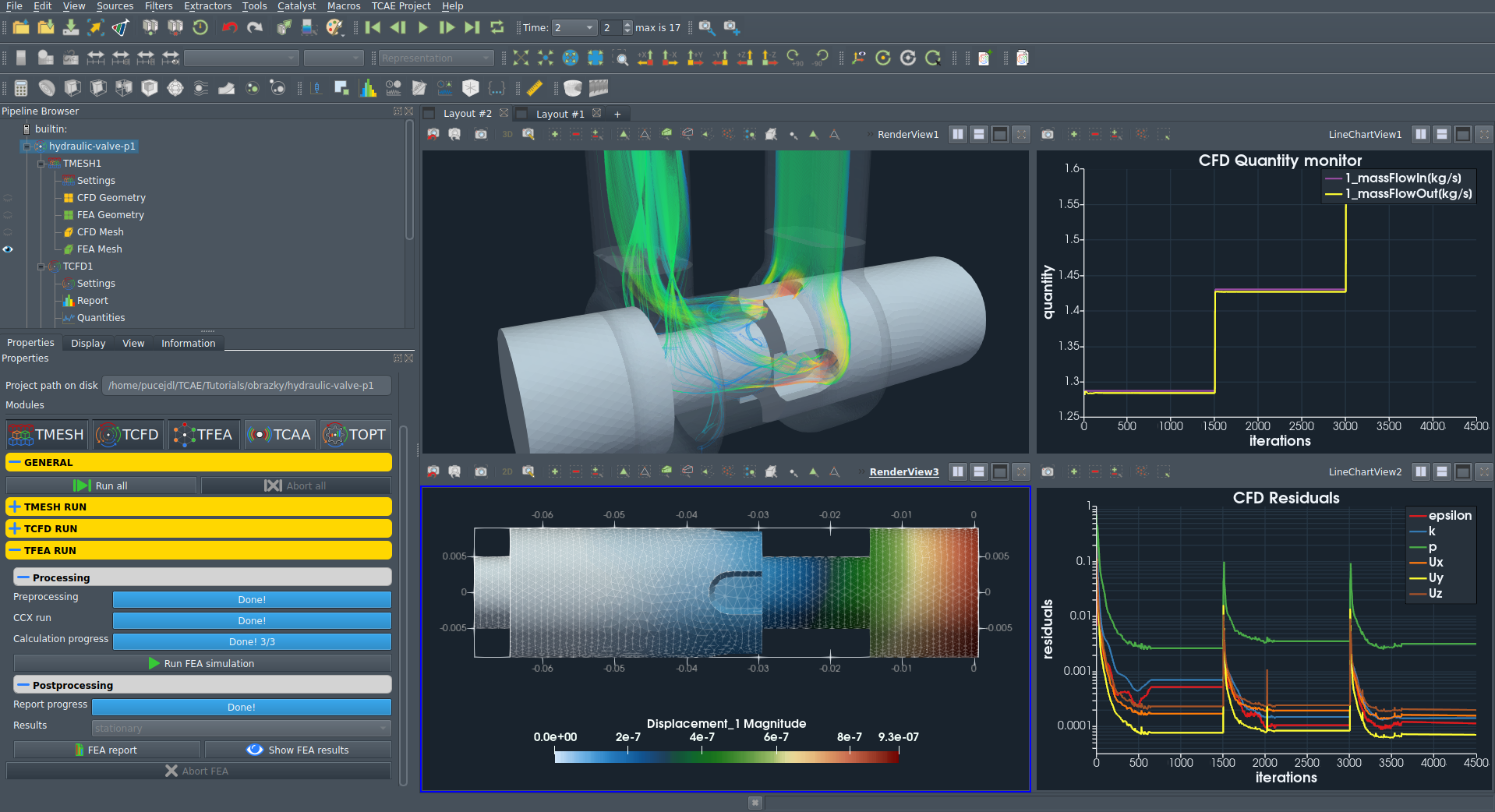
4. Specialized Software for Sealing and Material Selection
Sealing performance and material selection are critical factors in hydraulic cylinder design, as they directly affect reliability, leakage, and service life. Specialized software tools assist engineers in optimizing sealing systems and selecting appropriate materials.
4.1 ESI Virtual Performance Solution (VPS)
ESI VPS is a specialized software for simulating the performance of sealing systems in hydraulic cylinders. It enables engineers to analyze the behavior of seals (e.g., O-rings, piston seals, rod seals) under pressure, temperature, and dynamic motion, predicting leakage, friction, and wear. The software uses advanced finite element methods to model the interaction between the seal, cylinder wall, and piston rod, considering factors such as material elasticity, contact pressure distribution, and fluid lubrication. By simulating different seal designs and materials, engineers can optimize the sealing system to minimize leakage and extend service life, particularly in high-pressure or high-temperature applications.
4.2 Granta EduPack/Material Selector
Granta EduPack and Material Selector are comprehensive material information and selection tools that help engineers choose the right materials for hydraulic cylinder components. These software tools provide access to a vast database of materials (e.g., steels, aluminum alloys, composites, elastomers) with detailed properties such as strength, stiffness, corrosion resistance, fatigue life, and cost. Engineers can use the software’s selection tools to filter materials based on design requirements (e.g., high strength, low weight, resistance to hydraulic fluid) and compare different options to make informed decisions. Additionally, the software provides information on material processing and manufacturing constraints, ensuring that the selected materials are suitable for the intended production process.
Final Remarks
The design of hydraulic cylinders is a multi-faceted process that requires the integration of geometric modeling, structural analysis, fluid dynamics simulation, system integration, and material selection. The software tools discussed in this article cover all key aspects of the design process, from initial 2D drafting and 3D modeling to detailed performance simulation and material selection. Each software tool has its unique strengths and application scenarios: CAD software such as AutoCAD, SolidWorks, and Siemens NX provide the foundation for accurate geometric modeling; CAE tools like ANSYS Mechanical, Abaqus, and Fluent enable comprehensive performance validation; hydraulic system simulation software such as AMESim and MATLAB/Simulink facilitate system-level integration and optimization; and specialized tools like ESI VPS and Granta Material Selector assist in optimizing sealing systems and material selection.
In practice, engineers often use a combination of these software tools to leverage their respective advantages and achieve a holistic design solution. The choice of software depends on factors such as the complexity of the cylinder design, the requirements of the application, the available resources, and the level of accuracy needed. By utilizing these advanced software tools, engineers can improve design efficiency, reduce development costs, enhance product performance, and ensure the reliability and durability of hydraulic cylinders in various industrial applications. As technology continues to advance, these software tools will evolve with more powerful features and better integration capabilities, further supporting the innovation and optimization of hydraulic cylinder design.
Quanzhou Weihang Machinery Co.,Ltd.
Tel: 86-0595-27555169, 19942876218
E-mail: sales@whmechtech.com
Service Hours: 8:00AM-18:00PM (GMT+8)
Address: NO.444 Lunqian Road, Zhangban Town,
Taiwanese Investment Zone,
Quanzhou, China


