Welcome to Quanzhou Weihang Machinery Co.,Ltd.

1. Introduction
Hydraulic cylinders have long been the backbone of numerous industries, including construction, manufacturing, aerospace, and agriculture. Their ability to generate substantial force and perform heavy-duty operations has made them indispensable. However, as technology continues to evolve at a breakneck pace, the traditional hydraulic cylinder is on the cusp of a revolutionary transformation. The integration of artificial intelligence (AI) technology with hydraulic cylinders holds the promise of unlocking new levels of efficiency, precision, and reliability. This article delves into the potential of this integration and explores its wide-ranging applications and future prospects.
2. The Basics of Hydraulic Cylinders
Hydraulic cylinders operate on the principle of Pascal's law, which states that pressure applied to an enclosed fluid is transmitted undiminished to every portion of the fluid and the walls of the containing vessel. In a hydraulic cylinder, a piston is driven by hydraulic fluid under pressure, generating linear force. This simple yet powerful mechanism has been used in a vast array of applications. For example, in construction machinery such as excavators, hydraulic cylinders are responsible for the movement of the boom, arm, and bucket, enabling the precise digging and lifting of heavy materials. In manufacturing, they are used in presses to shape metal sheets with high force.
3. The Power of Artificial Intelligence
AI encompasses a wide range of technologies, including machine learning, deep learning, natural language processing, and computer vision. Machine learning algorithms can analyze large volumes of data, identify patterns, and make predictions or decisions without being explicitly programmed. Deep learning, a subset of machine learning, uses neural networks with multiple layers to model complex patterns in data. These capabilities of AI can be harnessed to enhance the performance of hydraulic cylinders significantly.
4. Integration Possibilities
4.1 Precision Control
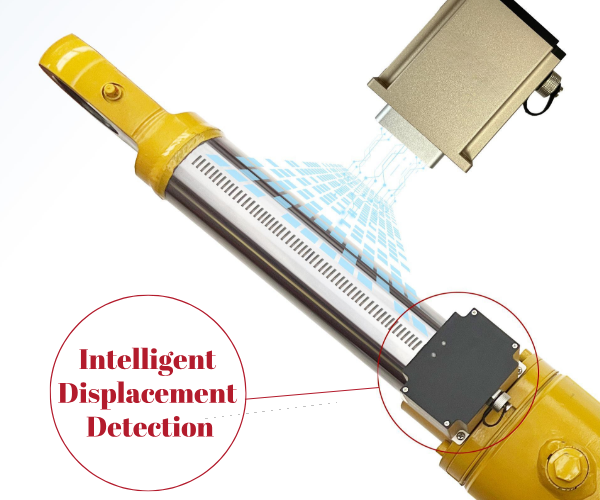
One of the most significant advantages of integrating AI with hydraulic cylinders is the improvement in control precision. Traditional servo-controlled hydraulic systems often have limitations in achieving extremely high-precision movements. However, AI algorithms can continuously analyze real-time data from sensors placed on the hydraulic cylinder, such as pressure sensors, position sensors, and temperature sensors. For instance, in a high-precision manufacturing process, an AI-enabled hydraulic cylinder can adjust the pressure and flow of the hydraulic fluid with sub-millimeter accuracy. Machine learning algorithms can learn from historical data and real-time feedback to optimize the control signals, ensuring that the piston moves exactly as required. This level of precision can be crucial in applications like micro-manufacturing, where even the slightest deviation can lead to product defects.
4.2 Energy Efficiency
AI can play a pivotal role in optimizing the energy consumption of hydraulic cylinders. By analyzing the load requirements in real-time, AI algorithms can adjust the pump speed, valve openings, and other parameters to match the actual power needs of the system. For example, in a hydraulic system used in a factory conveyor belt, the AI can predict when the load will increase or decrease based on the production rate. When the load is light, it can reduce the hydraulic pump's speed, saving energy. Some advanced AI-based systems can also adapt to changes in the operating environment, such as temperature and humidity, to further optimize energy usage. This not only reduces the operational costs but also contributes to a more sustainable and environmentally friendly operation.
4.3 Predictive Maintenance
The integration of AI enables predictive maintenance for hydraulic cylinders, which is a game-changer in terms of reducing downtime and maintenance costs. AI algorithms can analyze sensor data to detect early signs of component wear, leaks, or other potential failures. For example, by monitoring the vibration patterns, pressure fluctuations, and temperature trends of a hydraulic cylinder over time, machine learning algorithms can identify abnormal behavior. If a seal in the hydraulic cylinder is starting to wear out, the AI can detect the subtle changes in pressure and temperature and predict when the seal is likely to fail. This allows maintenance teams to schedule repairs or replacements proactively, rather than waiting for a breakdown to occur. In industries where continuous operation is critical, such as mining and power generation, predictive maintenance can significantly improve productivity.
5. Application Scenarios
5.1 Construction Industry
In the construction industry, AI-integrated hydraulic cylinders can revolutionize the operation of heavy machinery. For example, in a large-scale building project, a crane equipped with AI-enabled hydraulic cylinders can adjust its lifting force and boom position more precisely. The AI can take into account factors such as wind speed, the weight distribution of the load, and the stability of the crane itself. This not only improves the safety of the operation but also increases the efficiency of the construction process. In addition, in earth-moving equipment like bulldozers and loaders, AI-controlled hydraulic cylinders can optimize the digging and loading operations, reducing fuel consumption and wear on the equipment.
5.2 Aerospace Industry
In aerospace applications, hydraulic cylinders are used in various critical systems, such as landing gear and flight control surfaces. AI integration can enhance the reliability and performance of these systems. For example, in the landing gear system of an aircraft, AI-enabled hydraulic cylinders can adjust the damping force based on the landing conditions, such as the speed of the aircraft, the runway surface, and the weight of the aircraft. This ensures a smoother and safer landing. In flight control surfaces, AI can optimize the movement of the hydraulic cylinders to improve the aerodynamic efficiency of the aircraft, reducing fuel consumption during flight.
5.3 Agriculture
The agricultural sector can also benefit greatly from AI-integrated hydraulic cylinders. In modern farming equipment like tractors and combine harvesters, hydraulic cylinders are used for functions such as lifting and tilting implements. AI can enable these hydraulic cylinders to adapt to different soil conditions, crop types, and harvesting requirements. For example, in a combine harvester, the AI-controlled hydraulic cylinders can adjust the height of the cutting mechanism based on the height of the crop, ensuring a clean and efficient harvest. Additionally, the AI can optimize the operation of the hydraulic cylinders to reduce fuel consumption, which is a significant cost factor in agriculture.
5.4 Medical Field
In the medical field, hydraulic cylinders are used in some medical devices, such as hospital beds and patient-transfer equipment. AI integration can improve the safety and comfort of patients. For example, in a hospital bed, AI-enabled hydraulic cylinders can adjust the position of the bed based on the patient's needs and medical condition. The AI can detect if the patient is restless or in pain and make subtle adjustments to the bed's position to provide better comfort. In patient-transfer equipment, the AI-controlled hydraulic cylinders can ensure a smooth and stable transfer, reducing the risk of injury to both the patient and the healthcare provider.
6. Challenges and Solutions
6.1 Data Security
With the integration of AI, hydraulic cylinder systems will generate and transmit a large amount of data. Ensuring the security of this data is a major challenge. Hackers could potentially access the data and disrupt the operation of the hydraulic systems or steal sensitive information. To address this, advanced encryption techniques should be used to protect the data both in transit and at rest. Additionally, multi-factor authentication can be implemented to ensure that only authorized personnel can access the system.
6.2 Complexity of AI Algorithms
Implementing complex AI algorithms in hydraulic cylinder systems requires significant computational power and expertise. Developing and maintaining these algorithms can be challenging for many companies. To overcome this, companies can collaborate with AI research institutions or use pre-developed AI platforms that are tailored for industrial applications. These platforms can provide ready-to-use algorithms that can be customized to suit the specific needs of hydraulic cylinder systems.
6.3 Cost
The integration of AI technology into hydraulic cylinders may initially increase the cost of the systems. This includes the cost of sensors, computational hardware, and software development. However, in the long run, the benefits of improved efficiency, reduced downtime, and enhanced performance can outweigh the initial investment. To make the technology more accessible, manufacturers can explore economies of scale and develop cost-effective solutions. Additionally, government incentives and subsidies for adopting advanced technologies can also help offset the costs.
7. Conclusion
The integration of hydraulic cylinders and artificial intelligence technology opens up a world of possibilities. From achieving higher precision and energy efficiency to enabling predictive maintenance and enhancing performance in various industries, this integration has the potential to revolutionize the way hydraulic cylinders are used. Although there are challenges to overcome, such as data security, complexity, and cost, with the right strategies and technological advancements, these challenges can be addressed. As we move forward, it is expected that more and more hydraulic cylinder applications will incorporate AI, leading to a new era of intelligent and efficient industrial operations.
Quanzhou Weihang Machinery Co.,Ltd.


